
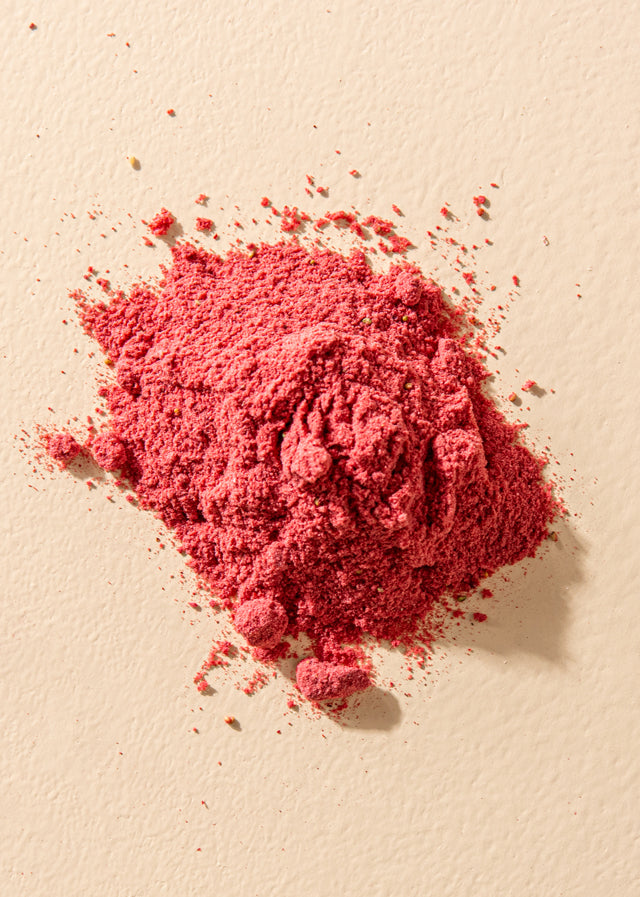
Freeze-dried fruit powder is fruit that has had its water removed and has then been milled until it's as fine as flour. That's it. At home we use it to add fruity flavour and colour to almost everything, from yoghurt to sponge cake to lemonade, so here's what it is, how it's made and ten ways to get the most out of it.
What exactly is freeze-dried fruit powder?
Think of a fresh strawberry. Almost all of it is water: around 90%. If you can take that water out without cooking the fruit, you're left with concentrated fruit, with its flavour, colour and aroma packed into very little space. Mill and sieve it afterwards and you've got a powder that dissolves, stirs in and sprinkles like any other storecupboard ingredient.
Our freeze-dried fruit powder collection has 23 products, and the ones we use most have something in common: the ingredient list is a single word. Strawberry. Raspberry. Mango. Pineapple. No added sugar, no flavourings, no colourings: when the list is one word long, there's no room for anything else. The colour you see is the fruit's own.
How it's made: cold, vacuum and patience
Freeze-drying is drying without heat. The fruit arrives fresh or frozen, is cleaned, prepared and goes into the freeze dryer. There, under vacuum, the frozen water turns straight from ice into vapour without ever melting. As there's no heat involved, the fruit doesn't get “cooked” along the way.
When it comes out, the fruit has less than 4% moisture. It's then milled and sieved into a fine, even powder, and passes through a metal detector before it's packed. With so little water inside, damp air is its worst enemy (more on that in a moment).
Four flavours to start with
If it's your first time, we'd suggest starting with these four, because between them they cover almost any use:
- Freeze-dried strawberry powder: vivid pink and the taste of ripe strawberries. High in fibre (15.1 g per 100 g). Available in 200 g and 2 kg.
- Freeze-dried raspberry powder: the tartest and most aromatic of the four, and one of the highest-fibre fruits in our whole range: 26.2 g per 100 g. In 250 g and 1 kg.
- Freeze-dried mango powder: golden, sweet and very tropical. High in fibre (9.2 g per 100 g). In 250 g and 2 kg.
- Freeze-dried pineapple powder: sweet and tangy at the same time. High in fibre (6.6 g per 100 g). In 250 g and 2 kg.
One thing to be clear about, so there are no surprises: “no added sugar” doesn't mean “no sugar”. When the water goes, the fruit's own sugar becomes concentrated. The mango powder, for example, has 76 g of sugars per 100 g, and the raspberry 25.2 g. That's why you use it by the spoonful, not by the handful.
10 ways to use freeze-dried fruit powder
- Fruit yoghurt in ten seconds. Add a spoonful of strawberry powder to natural yoghurt or skyr and stir. You've got strawberry yoghurt with no added sugar, and you know exactly what's in it.
- Colourful porridge. Stir it in at the end, once the oats are cooked, so the flavour doesn't fade. Mango with a little desiccated coconut is a safe bet.
- Overnight oats. Mix the raspberry powder with the oats and plant-based drink the night before. By morning it will have blended in and turned a gorgeous pink.
- Smoothies and shakes. No fresh fruit in the house? A spoonful of pineapple or mango powder in the blender saves breakfast.
- Pancakes and waffles. Add one or two spoonfuls to the batter, or dust it over the top when serving, like icing sugar, but made of fruit.
- Icings and creams. Mixed into cream cheese, Greek yoghurt or whipped cream, it adds flavour and colour without making the mixture watery, which is exactly what happens with fresh fruit or a purée.
- Chocolate. Sprinkle raspberry powder over melted chocolate spread out on a tray before it sets. The tart contrast with the cocoa is seriously addictive.
- Drinks. In sparkling water, homemade lemonade or iced tea, a teaspoon of strawberry or pineapple powder changes the drink completely.
- Toast with nut butter. Mix raspberry powder into almond butter and spread. The result is reminiscent of peanut butter and jam, minus the jam.
- Homemade energy balls and bars. Because it adds no water, it won't spoil the texture of the mixture. Use it in the mix or roll the balls in it to coat them.
How much to use and how to store it
There's no exact amount, but as a guide, a tablespoon is usually enough for a yoghurt or a bowl of porridge, and a teaspoon for a glass of water or plant-based drink. Best to start small and work up: the flavour is more intense than it looks.
Storing it well is easy if you remember that the powder is almost completely dry and very keen to soak up moisture:
- Keep it somewhere cool and dry, away from direct sunlight and heat sources.
- Close the pack tightly every time you open it, or transfer the powder to an airtight jar.
- Don't put it in the fridge: it's better off at room temperature.
- Once opened, use it up within a few weeks for the best flavour and texture.
- Always use a dry spoon. A single drop of water in the jar is what makes it clump.
Frequently asked questions
Does freeze-dried fruit powder contain added sugar?
The four we recommend here don't: their only ingredient is the fruit. They do contain the fruit's natural sugar, concentrated when the water is removed. You'll find the exact figures in the nutrition information on each product page.
Can I use it in baking?
Yes, you can add it to cake, biscuit or pancake batter. Even so, the colour and aroma tend to shine more when you use it cold, for example in icings, creams or sprinkled on at the end.
How is it different from whole freeze-dried fruit?
The difference is the format. Whole or diced fruit is crunchy and perfect as a topping. The powder dissolves and blends in, so it's the one you want when you're after flavour and colour spread throughout a recipe.
Does it contain allergens?
The ingredient is just fruit, but according to the product page it may contain traces of sesame, soya, peanuts and other tree nuts. If you have an allergy, always check the details for each product before you buy.
Our tip: start with a flavour you already love fresh and try it in your yoghurt tomorrow. Once you see what a single spoonful can do, the rest of the collection follows naturally. And if you hit on a combination you love, tell us about it.

Leave a comment
This site is protected by hCaptcha and the hCaptcha Privacy Policy and Terms of Service apply.